

Off-Grid Solar + Battery Systems for Riverside & the Inland Empire
Designed for rural properties, ADUs, cabins, PSPS outages, and homes that need serious backup power. GC-licensed, 30+ years construction expertise.
Start with a complimentary off-grid assessment
Designed around the outcome
Most companies sell solar first and treat backup as an add-on.
SolarCCS designs the electrical system around the outcome you actually want: whole-home backup, hybrid independence, or true off-grid operation. We build the panels, batteries, inverters, generator integration, and panel work in-house — because off-grid is an engineered electrical system, not a roof with panels on it.
For most Riverside homeowners with grid access, a hybrid solar + battery system gives you 80% of the independence at a fraction of the cost. True off-grid makes sense when you're remote, off the beaten path, or want complete independence. We'll tell you which one you actually need.
Who this is for
Six situations where off-grid earns its keep
If any of these sound like your property, true off-grid or a heavy hybrid system may be the right call.
Rural parcels
Properties where utility trenching runs $50k+ to connect — an off-grid system can cost less than the trench alone.
ADUs and workshops
Detached structures that need independent power without pulling a new service from the main panel.
PSPS-prone homes
SCE public-safety shutoffs in fire zones — foothills, canyon areas, and high-risk tiers that lose power for days.
Cabins and vacation homes
Remote properties with no grid access, or grid access so unreliable it might as well not exist.
Energy independence seekers
Homeowners who want zero utility dependency — not a lower bill, but no bill and no utility.
Existing solar owners
Adding battery + off-grid capability to a grid-tied system that already produces but has no storage.
Hybrid vs True Off-Grid
Which actually fits your home?
The honest answer, not the sales pitch. Most grid-connected homes are better served by a hybrid system.
| Feature | Hybrid (Grid + Battery)Recommended for most homes | True Off-Grid |
|---|---|---|
| Utility connection | Yes (grid as backup) | None |
| Battery size needed | 13–20 kWh (1 night) | 60–100+ kWh (3–7 days) |
| Generator required | Optional | Yes (auto-start recommended) |
| Cost range | $25k–$45k | $45k–$80k+ |
| Permit complexity | Standard | Higher (electrical + structural) |
| Backup duration | 1–2 days | 3–7+ days |
| NEM credits | Yes (export excess) | No |
| Best for | Most grid-connected homes | Remote, no-grid, or full independence |
For most Riverside homeowners with grid access, a hybrid system is the smarter investment. True off-grid makes sense when you're remote, off the beaten path, or want complete independence.
The Guardian Power Stack
Off-grid-ready, American-made equipment
The only residential inverter on the market with true off-grid islanding, generator integration, and dual MPPT — paired with the two batteries best suited for multi-day autonomy.
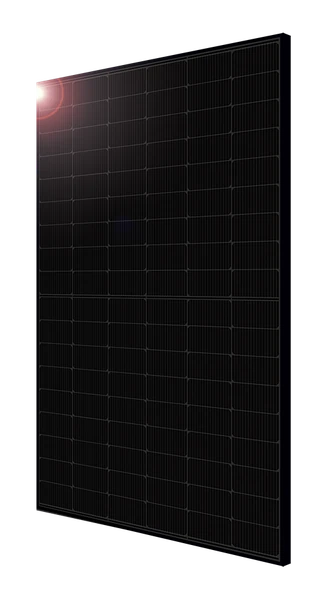
Silfab SIL-440 BK Panels
440W · 21.2% efficiency · 30-yr warranty · Made in USA (Fort Mill, SC)
Enphase IQ8HC-DOM Microinverters
Per-panel DC→AC conversion · domestic content · Made in USA
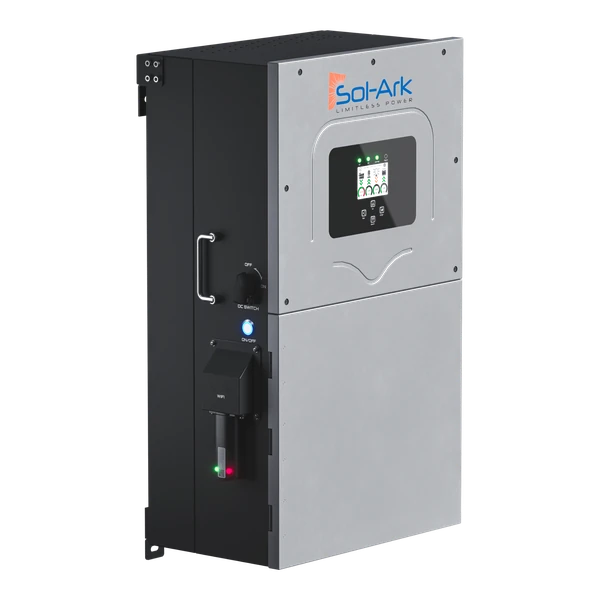
Sol-Ark SA-15K 12K-2P Hybrid Inverter
12 kW · 97.5% CEC · dual MPPT · 200A pass-through · generator input · full off-grid islanding · Made in USA (Allen, TX)
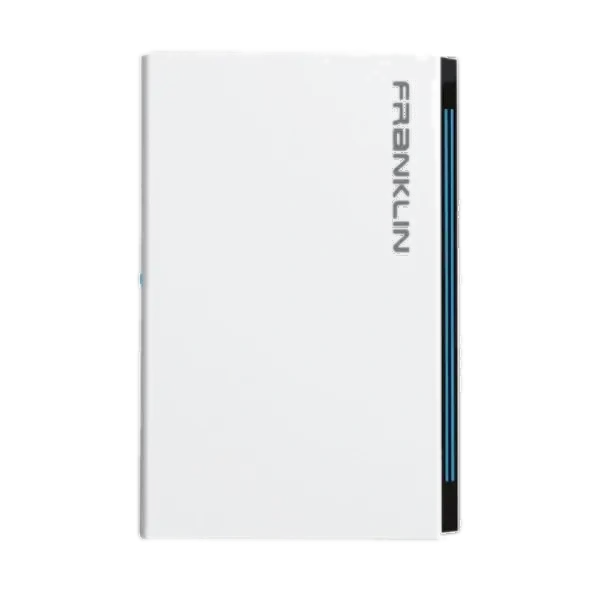
Franklin aPower 2 Battery
15 kWh · 10 kW continuous · LFP · scales to 225 kWh (15 units) · whole-home ATS · Made in USA (Santa Clara, CA)
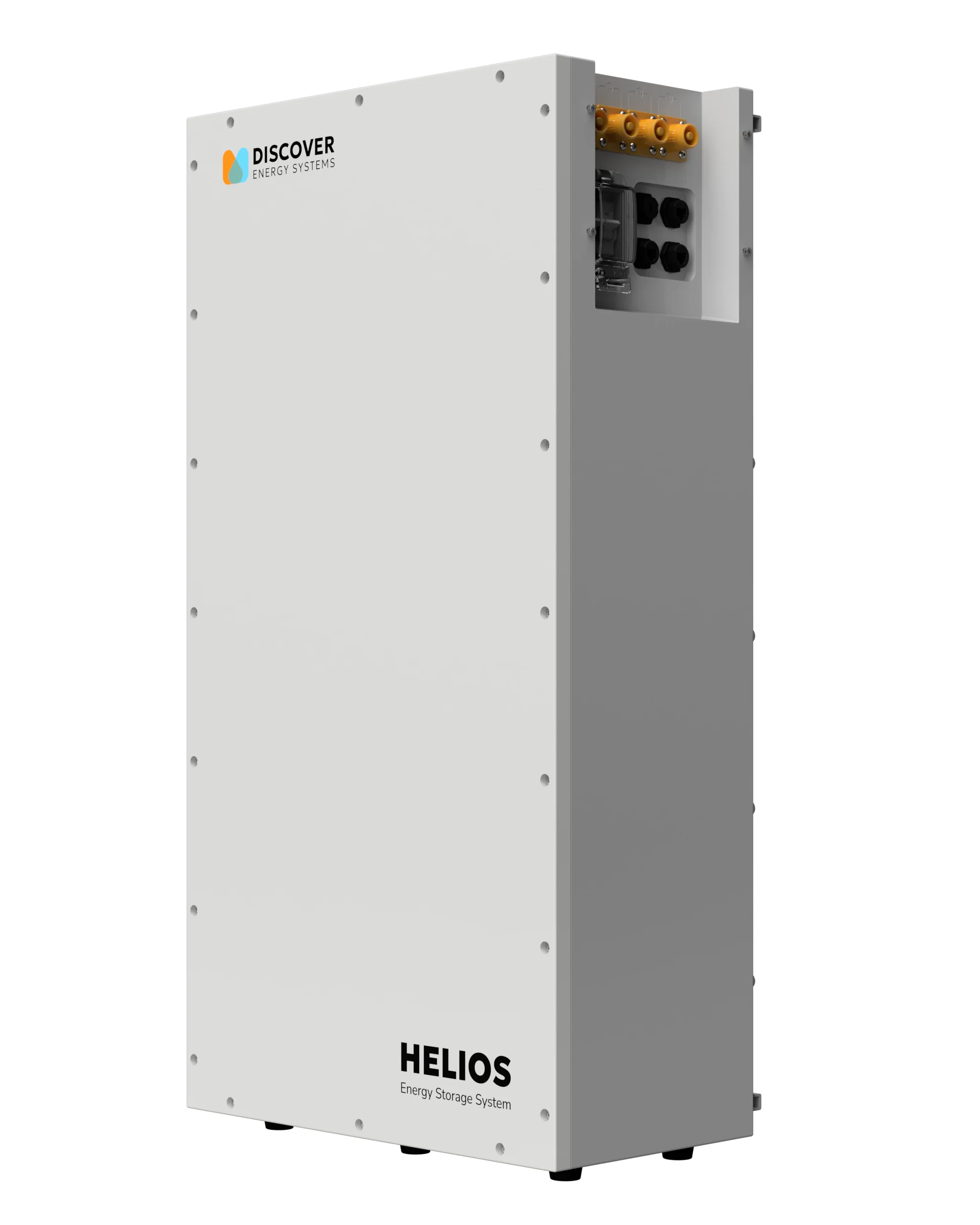
Discover Helios ESS Battery
16 kWh · 10 kW continuous · LFP · IP65 outdoor-rated · scales to 580 kWh
Why Sol-Ark matters: most competitors lead with Tesla Powerwall, which is hybrid-only with no true off-grid capability. Sol-Ark is the only residential inverter with off-grid islanding, generator integration, and dual MPPT built in.
System architecture
How an off-grid system flows
Solar generates, Sol-Ark routes, batteries buffer, and a generator backs it all up during extended storms.
- 1
Solar panels generate DC power from sunlight.
- 2
Sol-Ark hybrid inverter manages all power routing — solar, battery, generator, and grid.
- 3
Battery bank stores excess, sized for 3–7 days of autonomy.
- 4
Critical loads panel or whole-home panel distributes power where it matters.
- 5
Optional auto-start generator (propane or diesel) covers extended cloudy periods.
- 6
Optional grid connection (hybrid mode) keeps the utility as a safety net.
Cost expectations
Honest planning ranges
Most true off-grid systems are custom-priced after a site load assessment — battery autonomy, generator integration, trenching, and panel upgrades all change the scope. These ranges are for planning only, not quotes.
Cabin / ADU / Workshop
$18k–$35k
Single structure, essential loads, smaller battery bank.
Whole-Home Off-Grid
$45k–$80k+
Full residence, 3–7 days battery autonomy, auto-start generator.
Hybrid (Grid + Battery)
$25k–$45k
Most grid-connected homes, 1–2 days backup, NEM credits intact.
Battery storage may qualify for SGIP (Self-Generation Incentive Program) rebates depending on location and system size. Commercial properties may qualify for the Section 48E investment tax credit with domestic-content and energy-community bonuses. Consult your tax advisor for your specific situation.
Permits & construction
Off-grid isn't just panels on a roof
It's an engineered electrical system that requires panel work, structural mounting, generator integration, and permitting. As a GC-licensed contractor with 30+ years of construction experience, SolarCCS handles all of it in-house.
CSLB #983330 General Contractor
Licensed general contractor — not just a solar installer. Since 1993.
Electrical work
Panel upgrades, critical-loads subpanel, generator transfer switch, and conduit runs — all in-house.
Structural work
Ground-mount arrays, battery pad and foundation, and generator pad — built to code.
Permits pulled
We pull all Riverside County, San Bernardino County, and Orange County building and electrical permits.
Inspections & interconnection
Full inspection coordination, plus SCE/RPU interconnection for hybrid systems.
Subcontractor supervision
Specialized trades like concrete and trenching, supervised to SolarCCS standards.
Local use cases
PSPS zones and rural properties we serve
Public-safety shutoff territory and rural parcels across the Inland Empire — exactly where off-grid and heavy-hybrid demand lives.
Riverside
Orangecrest, Alessandro Heights, and rural foothill properties.
Moreno Valley
Rural parcels, Pigeon Pass area, and new-construction ADUs.
Lake Elsinore
Canyon homes and fire-zone properties prone to PSPS shutoffs.
Hemet / San Jacinto
Rural ranch properties and agricultural loads.
Beaumont / Cherry Valley
New developments, rural parcels, and fire-zone tiers.
Perris
Rural properties and ADU power needs.
Eastvale / Jurupa Valley
New construction and ADU + solar combinations.
Canyon Lake
Lakefront properties with rural access.
Off-grid solar questions, answered
This is not tax, legal, or financial advice. Consult a qualified professional.
Ready to go off-grid?
Get a complimentary off-grid feasibility review
We'll assess your property, energy needs, and goals to determine whether true off-grid or hybrid is the right fit. No pressure, no sales pitch — just an honest recommendation from a GC-licensed contractor.
Start your off-grid assessment